
| Our Publications | ||
| Books by Title | ||
| Books by Author | ||
| Books by Country | ||
| E-books | ||
| About | ||
| Orchid Press E-books | ||
| Distributed E-books | ||
| Our Bookshop | ||
| About Us | ||
| Browse Shop | ||
| How to Buy | ||
| Contact Us | ||
| WE BUY BOOKS AND LIBRARIES | ||
|
||
Central Asian Studies
Central Asian Studies continues a series of scholarly books on Central Asia and the Himalayas started in the early 1970s by a British publisher. The series comprises some re-issues of the previous books, as well as new titles.NOTE: Limited availability of some of the older titles.
| Archaeology | Architecture | Art |
| Bibliography | Languages | Anthropology |
Religion
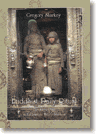 |
Buddhist Daily Ritual The Nitya Puja In Kathmandu Valley Shrines by Gregory Sharkey with Foreword by Richard F. Gombrichand Illustrations by Mukti Singh Thapa 2001. 387 pp., 23 colour photographs, 11 sketches. 22 x 16 cm., hardbound. ISBN-10: 974-8304-80-9 $39.50. In India, 695 rupees. ISBN-13: 978-974-8304-80-9 This book presents findings of research on a particular form of Buddhist ritual practiced by Sakyas and Vajracaryas, the inheritors of the monastic tradition and the highest Buddhist castes among the Newars, the indigenous people of Kathmandu Valley, Nepal. The author presents an authentic record of a unique form of Buddhist devotionalism and ritual: the everyday practices of the Newar Buddhists, the sole remnant of South Asia’s once extensive Mahayana community. Specifically, the exoteric liturgies performed each day at the main shrines of bahahs and bahis (as traditional Newar Buddhist viharas are known) are described, and the relationship of these rites to other elements of Newar Buddhist practice are analyzed, in order to shed light on connections between the latter and Buddhist practices elsewhere. This book is a major contribution to the study of South Asian ritual and Buddhist devotionalism. |
 |
Buddhist Himalaya: Travels and Studies in Quest of the Origins and Nature of Tibetan Religion by David Snellgrove 2011, xvi, 392 pp., 75 b&w illustrations, 3 maps, notes, appendices, biblio., general and Tibetan indices, 21.5 x 14 cm., softbound. ISBN-13: 978-974-524-141-1 $35.00 This book, a revised edition of one of this renowned scholar’s primary early works, describes the various developments in Tibetan Buddhism from earliest times to its present form. It is therefore a history of a rather special kind, in that it shows the evolution of Buddhism primarily from the Tibetan perspective. Since Tibetan Buddhism is largely of Indian origin, the account is mainly one of past cultural contacts between India and Tibet, either directly or with Nepal as an intermediary. It is in the Himalayan regions that we must seek the cultural and archaeological traces of past contacts, and here also that we meet with the active influence of Tibetan religions in districts that have turned to the Tibetans for guidance, now that Buddhism has all but disappeared in the land of its origins. In an updated preface, the author draws attention to changes in interpretation and perspective that have quite properly taken place over the intervening years. While the substance of an account of this kind must be sound research, the inspiration has been provided by Dr. Snellgrove’s own travels in these remote regions. A new addendum provides fascinating insight into details of the author’s historic first travels into these areas in 1953. |
 |
Four Lamas of Dolpo: Autobiographies of Four Tibetan Lamas (16th-18th Centuries) Vol. I: Introduction and Translations by David Snellgrove 3rd ed. 2011, 368 pp., 48 b & w photos, 3 line drawings, 2 maps, Tibetan and general indices, 21 x 15 cm., softbound. ISBN-13: 978-974-524-142-8 $45.00 This English translation of the manuscript autobiographies of four Tibetan lamas of the Dolpo region, three of whom were born in the 16th century and one in the 17th, offers the reader important insight into medieval Tibetan religious life. The manuscript records of these lives were discovered by the author/translator, an eminent scholar of Tibetan religion and culture, in the library of a monastery in Dolpo in 1961. Dr. Snellgrove remained in Dolpo to work with an erudite local monk on the preparatory work of the translation, thereafter completing the translation on his return to England. Four Lamas of Dolpo provides a unique inside account of Tibetan religion and culture, as it has survived and has been practiced in an enclosed Tibetan community, practically unchanged for the past thousand years. |
 |
Four Lamas of Dolpo: Autobiographies of Four Tibetan Lamas (16th-18th Centuries) Vol. II: Tibetan Texts and Commentaries by David Snellgrove 2011, xvi, 392 pp., 75 b & w illustrations, 3 maps, notes, appendices, biblio., general and Tibetan indices, 21.5 x 14 cm., softbound. ISBN-13: 978-974-524-143-5 $45.00 The present volume provides an edited and corrected transcription the original Tibetan textual autobiographies of four Tibetan lamas of the Dolpo region, three of whom were born in the 16th century and one in the 17th. An accompaniment to Volume I, which provided the full English translation of the biographies, this second volume, in addition to the Tibetan texts formatted for reproduction in Western book form, also includes transliterations of short passages and verse extracted from the manuscripts, notes on the translations in the first volume and a detailed glossary. Of interest to all students of Tibetan religion and culture who are also versed in classical Tibetan language. |
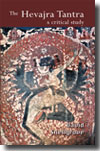 |
The Hevajra Tantra: A critical study by David Snellgrove Second edition 2010 (first published OUP London 1959, in two volumes), 2010, xvi, 350 pp., 2 b & w illustrations 23 x 15 cm., softcover. ISBN-13: 978-974-524-128-2 $50.00 In this groundbreaking work, the author presents us with a full translation of, and commentary on, the Hevajra tantra, providing not only deep insight into arguably the most important surviving tantric Buddhist text but also placing the entire corpus of such works into a more accurate context. Snellgrove presents the Hevajra tantra, and tantric texts of this class, not as a degenerate product of a faith at the time in terminal decline in India—as has often been claimed by puritanical scholars—but rather as a wholly legitimate expression of esoteric ritual and meditative practice developed as a natural evolution within the madhyamika tradition. While based primarily on Nepalese manuscript editions of the text, Snellgrove makes extensive reference to the Tibetan translation as well as to extant Indian commentaries. The first half of the work comprises an introduction and the actual translation with detailed annotations, while the second consists of the Romanized original Sanskrit and Tibetan texts and an extensive glossary. "Snellgrove has done an important job and he has done it very well indeed." A. Bharati, JAS Vol. 20, No. 2 |
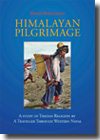 |
Himalayan Pilgrimage: A Study of Tibetan Religion by a Traveller Through Western Nepal by David L. Snellgrove 2011, 392 pp. 85 b & w photos, appendices of Tibetan place names, Divinities & Lamas, index, 9 maps, biblio., 21.5 x 14 cm., softbound. ISBN-13: 978-974-524-138-1 $35.00 Himalayan Pilgrimage describes a seven months’ journey which the author made through the remote Tibetan regions of Western Nepal in 1956. Travelling everywhere on foot with his Nepalese companion, Pasang Khambache Sherpa, who is eulogized in this new edition, Dr. Snellgrove covered more than a thousand miles of mountainous country and crossed some fifteen major passes of between seventeen- and twenty-thousand feet in altitude. The intention of the journey was to learn of the different regions and people and to study in particular the types of Tibetan religion practiced in those remote lands. The most interesting of these is perhaps Dolpo, through which very few foreigners have passed, then or to the present day. The author, well known for his Buddhist studies and for his affection for Tibetan peoples, gives a lively and sympathetic account of the traditional lives and beliefs of these cheerful people. |
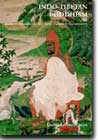 |
Indo-Tibetan Buddhism: Indian Buddhists and their Tibetan Successors by David L. Snellgrove 2004. 666 pp., 122 b&w pl., 5 maps, 1 line drawing, bibliography and index, 24.5 x 17.5 cm., hardcover. ISBN-10: 974-524-013-3 $45.00 ISBN-13: 978-974-524-013-1 This monumental study provides a comprehensive survey of Indian Buddhism and its subsequent establishment in Tibet, where it was tranferred more or less complete preceding its demise in northern India in the thirteenth century ad. It is especially informative on the tantric period of Buddhist theory and practice from the eighth to the thirteenth centuries, but also deals at length with the earlier evolution of Buddhist doctrines, the ‘Three Turnings of the Wheel’, during the first thousand years. Later in the book the author deals mainly with the conversion of Tibet. He emphasizes the great importance played by the kingdoms of Central Asia along the ancient Silk Route in the gradual process of Tibetan conversion. Acknowledging his debt to other scholars of this little-known part of the world, Professor Snellgrove draws upon contemporary documents to illustrate the cultural changes that came over Tibet as a result of its rule from the seventh to ninth centuries of an extensive Central Asian Empire, a period of their history largely forgotten by the Tibetans themselves when they later embarked upon the wholesale absorption of Buddhism from its Indian source in the period up to the thirteenth century. |
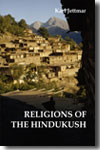 |
Religions of the Hindukush by Karl Jettmar 2018, 525 pp., 12 b&w plates, 24 line drawings and sketches, 3 maps, 23 x 15 cm., softcover. ISBN-13: 978-974-524-218-0 $65.00 The traditional religion and rituals of the remote tribal groups along the borderlands of eastern Afghanistan and northern Pakistan, with their complex cosmology of gods and demons, preserved elements from archaic Indo-Aryan, and possibly even pre-Vedic, beliefs. While the peoples of this region were converted to Islam by the turn of the 20th century, the deeply conservative nature and geographical isolation of these tribes have combined to preserve ancient folk religious practices long extinct elsewhere in Central and South Asia. The author, a renowned Austrian anthropologist, integrates the diverse scholarly findings of colleagues in the fields of linguistics, cultural history and archaeology, with his own field investigations to construct an authoritative, yet highly readable account of the religious practices of this remote and little understood corner of Asia. A groundbreaking and indispensable reference both for the general student of Asian religions and for those with special focus on the tribal cultures and customs of eastern Afghanistan and Pakistan’s North-West Frontier Province. |
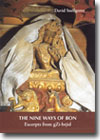 |
The Nine Ways of Bön: Excerpts from gZi-brjid Edited and translated by David Snellgrove 2010, 318 pp, 22 b & w plates, 24.5 x 17.5 cm., softcover. ISBN-10: 974-524-111-3 $40.00 ISBN-13: 978-974-524-111-4 To practising bonpos, Bön simply means the true religion of Tibet, while to Tibetan Buddhists, Bön refers to the false teachings and practices that were prevalent before Buddhism finally succeeded in gaining a firm hold on the country. The present study resulted from a period during which the author, a renowned scholar of Asian languages and cultures, was engaged in intense contact with practicing bonpos. It consists of the translation of fundamental texts of Bon, based on a manuscript of some 400 years of age, in which the entire Bön tantric practice is summarized. In many ways remarkably parallel to the early Buddhist teachings, much of the Bön tradition was subsequently incorporated back into Buddhism when that religion was formally adopted into Tibetan culture. This important study, first published in the 1960s and long out of print, will be welcomed by all with interest in the religions of the Himalayas. [Read a review from East and West; IsIAO] |
PO Box 70, Trinity TB, NL, A0C 2S0, Canada
Telephone: +1 709-330-4703